



Located in:
- III. Operational Planning Elements
The Unified or Combined State Plan must include an Operational Planning Elements section that supports the State’s strategy and the system-wide vision described in Section II(c) above. Unless otherwise noted, all Operational Planning Elements apply to Combined State Plan partner programs included in the plan as well as to core programs. This section must include—
- a. State Strategy Implementation
The Unified or Combined State Plan must include–
- 2. Implementation of State Strategy
Describe how the lead State agency with responsibility for the administration of each core program or a Combined Plan partner program included in this plan will implement the State’s Strategies identified in Section II(c). above. This must include a description of—
- 2. Implementation of State Strategy
- a. State Strategy Implementation
III. a. 2. I. Coordinating with Economic Development Strategies
Describe how the activities identified in (A) will be coordinated with economic development entities, strategies, and activities in the State.
Current Narrative:
The Department of Economic Development and Commerce (DEDC) serves as the umbrella entity for key economic development agencies in Puerto Rico. Created in 1994, the DEDC is at the leading edge of Governor’ s policy of taking the most out of Puerto Rico's fiscal autonomy as a tool for promoting local and foreign investment. This vision allows for the creation of thousands of jobs in manufacturing, aerospace, telecommunications and information technology, engineering services, scientific research and others.
To achieve these strategic goals, the DEDC is working on initiatives that:
- Create new tax and economic incentives for high technology industries as well as start-ups and locally owned businesses;
- Improve Puerto Rico's regulatory and structural framework in order to enhance its competitiveness as a destination for investment and the production of high-value goods and services;
- Establish regional centers, or "poles," of economic activity throughout the island; and
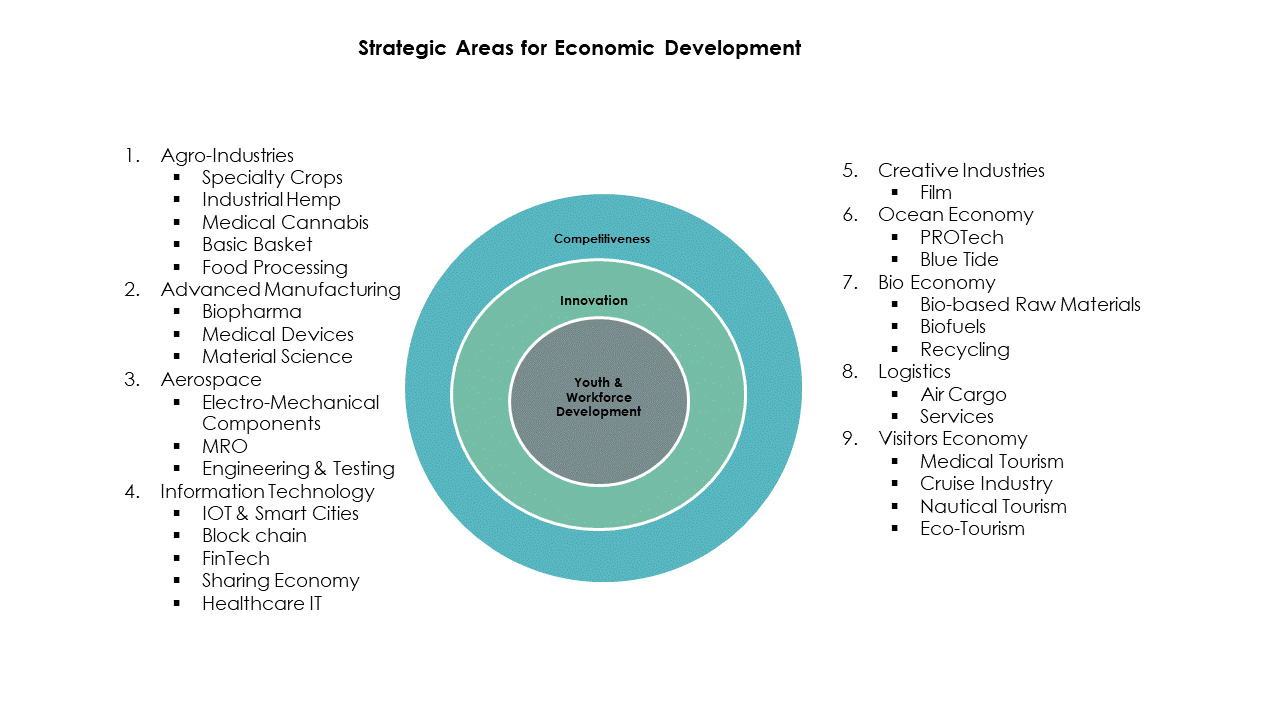
- Grow critical sectors, including manufacturing, tourism, commerce and exportation, film and visual arts, banking and insurance.
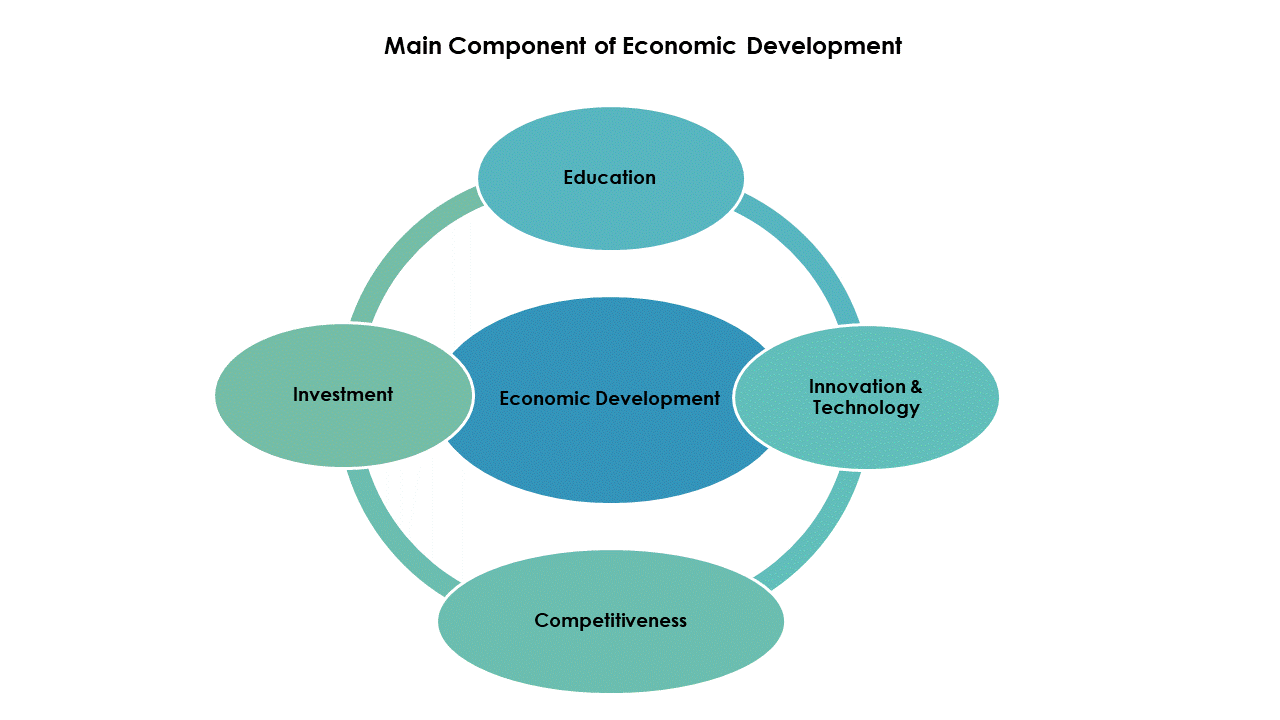
Main Components of Economic Development
Puerto Rico’s education must be transformed to foster a maximum level of innovation & technology that enables us to be globally competitive and thus reach the desired level of local, national and foreign investment that allows the export of goods and services. Education: System Transformation and Skills Promotion.
The education system is an essential component and is a key for economic development, so there is the need to continually calibrate and align curricula and teaching methodologies to ensure that they address the needs of local and international industries, and that we help professionals in the work force to reinvent themselves, as they need.
Innovation: Solid Ecosystem for Entrepreneurship
In order to establish a healthy and sustainable ecosystem of innovation it is fundamental that the projects of entrepreneurship respond to the needs of the market. PRDEDC will provide Technical and Financial Assistance in areas like Market Needs; Applied Research; Incubators Startups; Accelerator Startups; Substitution of Imports of Goods and Services.
Competitiveness: Structural Reforms
- Structural Reforms: Labor Permits Tax Energy
- Eliminate Requirement for Electronic Export Information (EEI) - Elimination of the federal requirement for export, achieving an equal treatment in order for transactions to and from the Island be more agile at a lower cost.
- Incentives Code
- Consolidates and rationalizes all economic incentives in a single code.
- Establishes a uniform process for granting incentives.
- Focus the resources on the incentives with Return of Investment
Investment: Tools and Opportunities
- Federal Programs
- New Market Tax Credits
- EB-5 Program
- Foreign Trade Zones
- Insert PR in US treaties to avoid double taxation
- State Initiatives
- Invest Puerto Rico
- Destination Marketing Org. (DMO)
- Incentives Code
- Infrastructure Plan
- Investment Opportunities
- Public Private Partnerships
- Science City
- Roosevelt Roads Redevelopment
- Port of Las Americas
Efficient and effective use of incentives
- Exports of goods for niche markets
- Exports of services
- Substitution of imports
- Supply chain associated with exports and substitution of imports
- Establishment of small businesses and start-ups
SMEs: Programmatic Commitments for Economic Development
- Innovative SMEs
- Designation of 10% of the Special Fund for Economic Development (FEDE) to provide contributory incentives to SMEs that foster innovation in economic sectors.
- Maletín Empresarial de la Mujer
- Program focused on supporting those Puerto Rican women who wish to develop in the business world mainly in the areas of technology and innovation.
- Additional Initiatives
- Master Entrepreneurship
- Business Intelligence and Entrepreneurship System
- Entrepreneurship in Functional Diversity population
- From School to Business
- SME Food Sector
Structural Reform
- Act 1-2017 – The Participative Public Private Partnerships Act. Strengthens the P3 legal framework to facilitate critical infrastructure investments and improve public services.
- Act 4-2017 – The Labor Transformation and Flexibility Act. Amends labor laws with the intention of improving labor market competitiveness, improving the labor participation rate, and halting the migration of citizens to external labor markets.
- Act 8-2017 – The Act for the Administration and Transformation of Human Resources in Government. Allows for the transfer of workers across the Government to save $100 million through mobility and attrition.
- Act 13-2017 – Enterprise Puerto Rico Act. Creates a not-for-profit corporation to promote the economic development of Puerto Rico, attract foreign direct investment and incentivize investments in technology in collaboration with the private sector.
- Act 17-2017 – Act to Promote Puerto Rico as a Destination. Enables the creation of a destination marketing organization (DMO).
- Act 18-2018 – Reforms, simplifies and expedites the permitting process in order to improve quality and efficiency in processing requests for all permits, licenses, inspections, complaints, certifications, consultations, or any other authorization that affects in any way the operation of a business in Puerto Rico, including those issued by municipalities.