



Located in:
- II. Strategic Elements
The Unified or Combined State Plan must include a Strategic Planning Elements section that analyzes the State’s current economic environment and identifies the State’s overall vision for its workforce development system. The required elements in this section allow the State to develop data-driven goals for preparing an educated and skilled workforce and to identify successful strategies for aligning workforce development programs to support economic growth. Unless otherwise noted, all Strategic Planning Elements apply to Combined State Plan partner programs included in the plan as well as to core programs. Where requirements identify the term “populations”, these must include individuals with barriers to employment as defined at WIOA Section 3. This includes displaced homemakers; low-income individuals; Indians, Alaska Natives, and Native Hawaiians; individuals with disabilities, including youth who are individuals with disabilities; older individuals; ex-offenders; homeless individuals, or homeless children and youths; youth who are in or have aged out of the foster care system; individuals who are English language learners, individuals who have low levels of literacy, and individuals facing substantial cultural barriers; farmworkers (as defined at section 167(i) of WIOA and Training and Employment Guidance Letter No. 35-14); individuals within 2 years of exhausting lifetime eligibility under the Temporary Assistance for Needy Families program; single parents (including single pregnant women); and long-term unemployed individuals. Additional populations include veterans, unemployed workers, and youth, and others that the State may identify.
- a. Economic, Workforce, and Workforce Development Activities Analysis
The Unified or Combined State Plan must include an analysis of the economic conditions, economic development strategies, and labor market in which the State’s workforce system and programs will operate.
- a. Economic, Workforce, and Workforce Development Activities Analysis
II. a. 1. A. Economic Analysis
The Unified or Combined State Plan must include an analysis of the economic conditions and trends in the State, including sub-State regions and any specific economic areas identified by the State. This must include—
i. Existing Demand Industry Sectors and Occupations
Provide an analysis of the industries and occupations for which there is existing demand.
ii. Emerging Demand Industry Sectors and Occupations
Provide an analysis of the industries and occupations for which demand is emerging.
iii. Employers’ Employment Needs
With regard to the industry sectors and occupations identified in (A)(i) and (ii), provide an assessment of the employment needs of employers, including a description of the knowledge, skills, and abilities required, including credentials and licenses.
Current Narrative:
Existing Demand Industry Sectors and Occupations
Overall industry employment in Oklahoma is projected to grow by 10.42% between 2020 and 2030. The Goods Producing portion of the economy will be powering the overall leap forward by gaining 14.36% - only Construction is projected to increase at a below average pace of 9.34%. Per the forecast most employees will continue to be employed by one of the many industries in the giant Services-Providing sector which will grow by 10.43%. Within its ranks however there is remarkable diversity in expected outcomes from Information’s unexpected (+15.1%) surge to employ more than 20,000 Oklahomans to the relatively stable conditions in Financial Activities (+1.64). Cutbacks in federal and state government employment are expected to reduce overall public sector payrolls even with the gains coming from local entities.
At the occupational level the growth is expected to be faster in the fields where some kind of university degree is required – jobs that require an Associate’s, Bachelor’s, Master’s, Professional, and Doctoral should all be growing faster than the overall state economy. However, there is also considerable demand for workers who have non-degree Postsecondary Awards. Occupations that typically need only High School graduates or individuals with only “Some College” are projected to be growing quite a bit slower than everything else.
Emerging Demand Industry Sectors and Occupations
This section will provide both data and analysis of key industries and occupations in Oklahoma using official labor market statistics from the OESC, the BLS, and the Census Bureau.
- Industries with a Heavy Concentration in the State
- Occupations with a Heavy Concentration in the State
- Statewide Long-Term Industry Projections, 2020 – 2030
- Statewide Long-Term Occupational Projections, 2020-2030
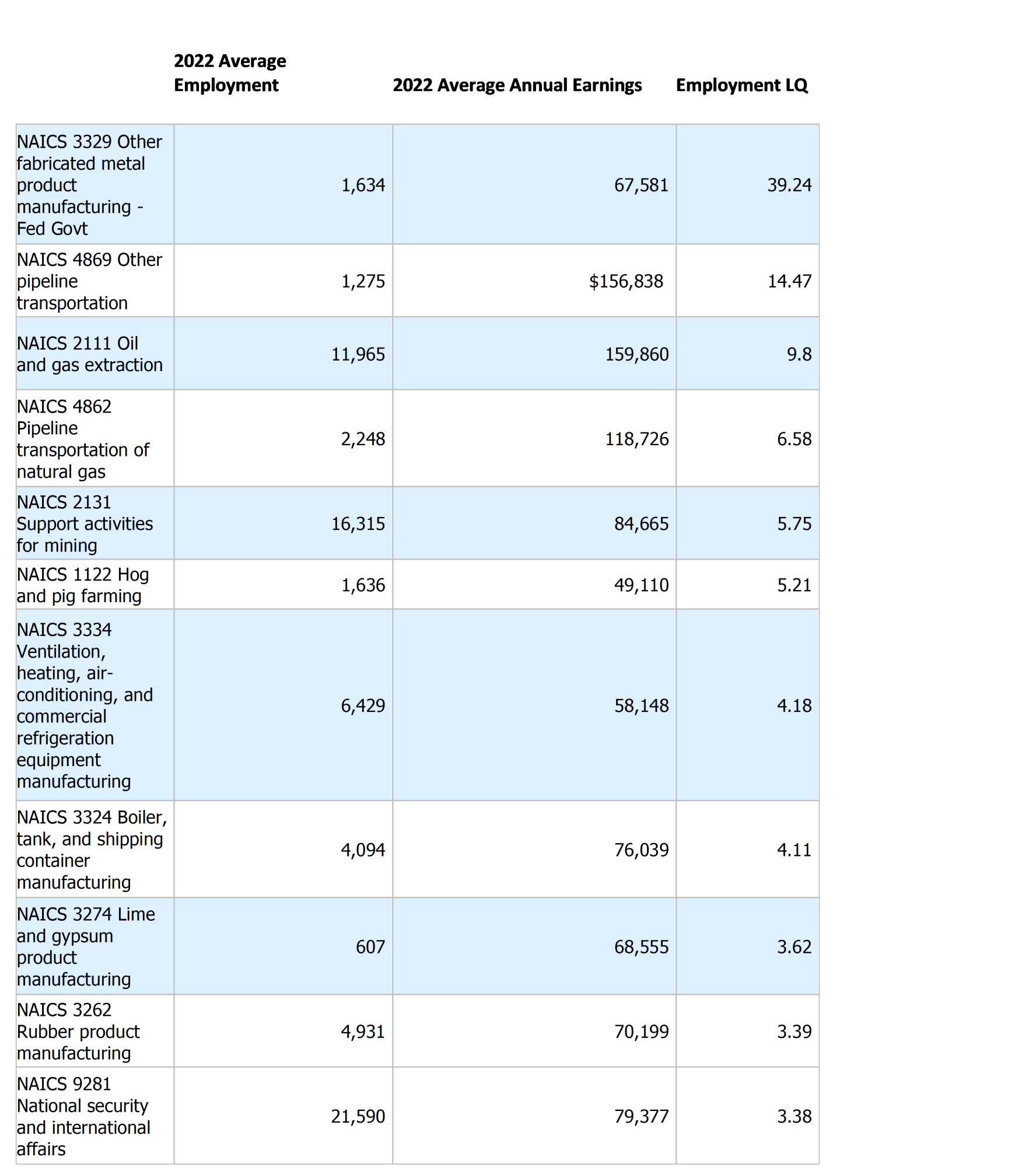
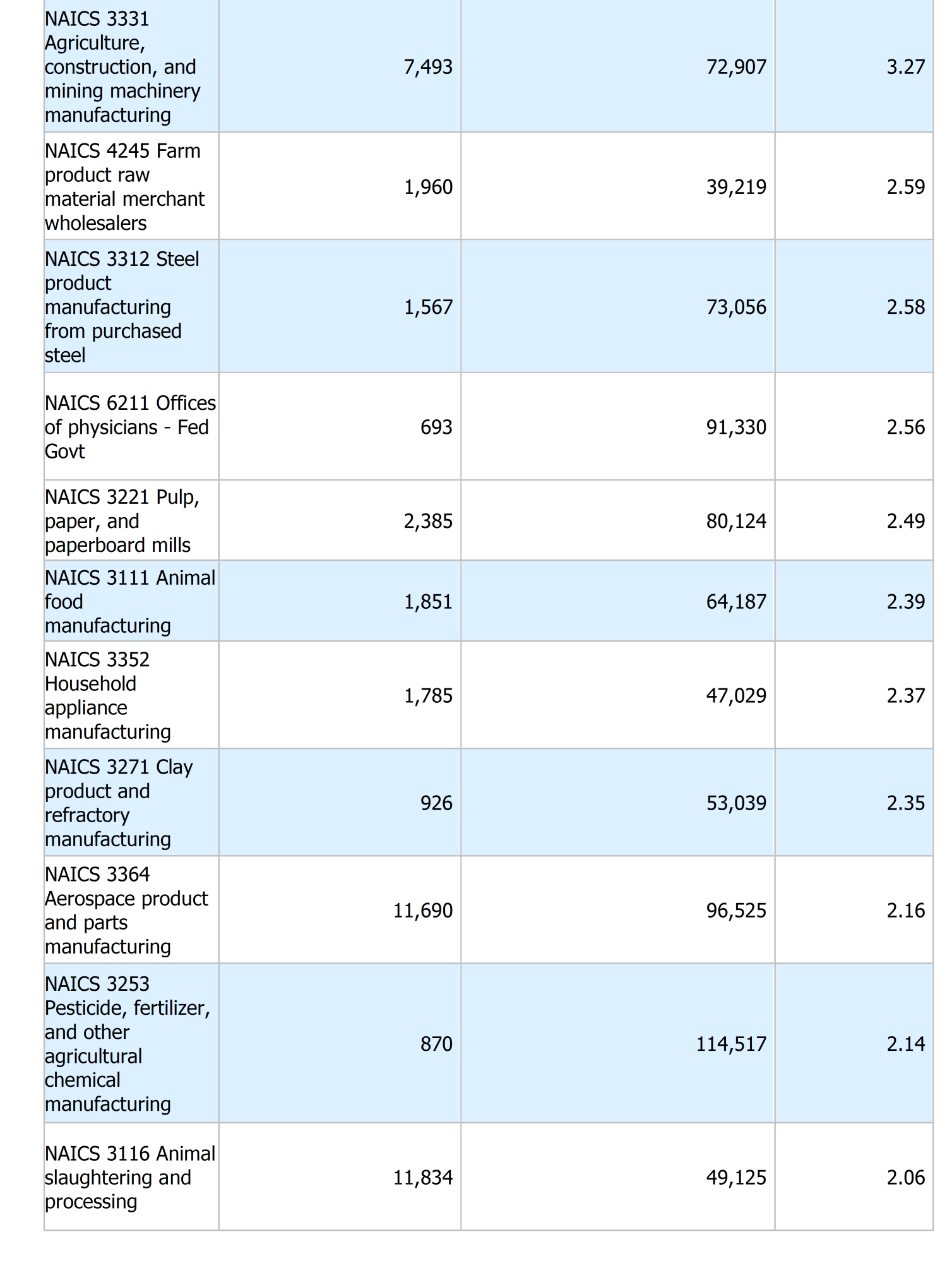
It is well understood that some industries are more heavily concentrated in some geographic areas than in others as individual firms have realized advantages in being close to competitors, customers, supply chain sources, etc. Knowing this policy makers can profit by understanding the long-standing (and perhaps even the emerging) economic geography of their state and sub-state regions. Using location quotients we can identify those industries and occupation that already exist and are thriving within our state.
Utilizing 4-digit NAICS codes we have identified industries with at least 500 employees within the private and federal government sectors that have a relative employment concentration that is at least twice that of the nation.
Next is a table showing similar employment concentration data but from an occupational perspective. Here we are illustrating occupations that have LQs of at least 3.0 and at least 100 employees:




Employers' Employment Needs
While in many respects the current labor market environment within Oklahoma is ideal for individuals seeking new work opportunities (for example the near historic ratio of open jobs compared to unemployed) state leaders are not unaware of the remaining workforce challenges faced by many Oklahomans – including those faced by potential employers. With this in mind, Oklahoma will focus our reemployment efforts in the following ways:
- Geographic parts of the state with have an above intensity of unemployment as measured by Areas of Substantial Unemployment, excess unemployment, and by higher rates of unemployment as seen via the Jenks optimization method.
- Understanding that some areas with a more intense unemployment conditions have smaller populations, the state (if it is to find overall economic success) must not loose focus on higher population areas and especially the large number of unemployed and underemployed who reside in small pockets within our largest counties.
- Lastly, Oklahoma will continue efforts to reconnect job losers (regardless of their geographic location) to the labor market especially those who are more likely to exhaust UI or not be reemployed in their prior industry or occupation. Specifically, the state will identify industries and occupations that are expected to and/or actively showing job declines and will provide additional reemployment services to those who are at higher risks of involuntary layoffs or prolonged unemployment.