


Located in:
- II. Strategic Elements
The Unified or Combined State Plan must include a Strategic Planning Elements section that analyzes the State’s current economic environment and identifies the State’s overall vision for its workforce development system. The required elements in this section allow the State to develop data-driven goals for preparing an educated and skilled workforce and to identify successful strategies for aligning workforce development programs to support economic growth. Unless otherwise noted, all Strategic Planning Elements apply to Combined State Plan partner programs included in the plan as well as to core programs. Where requirements identify the term “populations”, these must include individuals with barriers to employment as defined at WIOA Section 3. This includes displaced homemakers; low-income individuals; Indians, Alaska Natives, and Native Hawaiians; individuals with disabilities, including youth who are individuals with disabilities; older individuals; ex-offenders; homeless individuals, or homeless children and youths; youth who are in or have aged out of the foster care system; individuals who are English language learners, individuals who have low levels of literacy, and individuals facing substantial cultural barriers; farmworkers (as defined at section 167(i) of WIOA and Training and Employment Guidance Letter No. 35-14); individuals within 2 years of exhausting lifetime eligibility under the Temporary Assistance for Needy Families program; single parents (including single pregnant women); and long-term unemployed individuals. Additional populations include veterans, unemployed workers, and youth, and others that the State may identify.
- a. Economic, Workforce, and Workforce Development Activities Analysis
The Unified or Combined State Plan must include an analysis of the economic conditions, economic development strategies, and labor market in which the State’s workforce system and programs will operate.
- a. Economic, Workforce, and Workforce Development Activities Analysis
II. a. 1. C. Comparison of Economic and Workforce Analytical Conclusion. Describe areas of opportunity for meeting hiring, education, and skills needs identified in the economy compared to the assets available in the labor force in the state.
Current Narrative:
Labor Force
The labor force participation rate (LFPR) in West Virginia registered at 54.7% in 2022, the lowest in the nation. The national labor force participation rate stood at 62.2%.
Fewer than one-half (40.0%) of West Virginia counties recorded a LFPR below 50.0% in 2022. Several of these counties are in the southern coalfields of West Virginia (Workforce Development Regions 1 & 2). McDowell County recorded a labor force participation rate of 32.0%, the lowest in the state. Other southern counties with a labor force participation rate less than 50% included Wyoming (41.8%), Boone (40.2%), Logan (43.2%), Mingo (33.3%), Wayne (47.7%), Summers (46.8%), Lincoln (42.9%), Fayette (46.5%), and Mercer (43.2%).
Ten counties in the state recorded a labor force participation rate greater than 60.0% in 2022. These counties are Putnam (60.2), Ohio (60.7), Doddridge (62.0), Grant (62.4), Harrison (62.8), Preston (63.2), Berkeley (65.5), Pendleton (65.6), Monongalia (67.2), and Jefferson (68.8). In 2022, seven West Virginia counties reported a labor force participation rate greater than the national rate of 62.2%.
Figure 36: WV Labor Force Participation Rate by County

Source: 2022 Workforce WV LMI Data
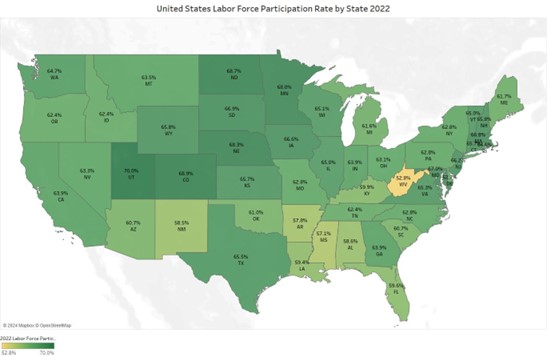
Examining the LFPR for West Virginia and its contiguous states provides a comprehensive view of the region's workforce engagement in 2022. West Virginia, with an LFPR of 52.8%, exhibited a lower participation rate compared to its neighboring states. WV’s contiguous states showcase varying levels of labor force participation, influencing the overall economic landscape.
Maryland leads the region with a robust LFPR of 67.0%, indicating a high level of workforce engagement. Virginia closely follows with a rate of 65.3%, contributing to a dynamic and active labor market. Ohio, at 63.1%, demonstrates solid workforce participation, aligning with the broader regional trends.
Pennsylvania and Kentucky present LFPRs of 62.8% and 59.9%, respectively, showcasing moderate workforce engagement. Kentucky, although slightly below the national average in LFPR, remains an essential contributor to the regional labor market.
West Virginia, despite its LFPR of 52.8%, plays a crucial role in the regional economy, and there is an opportunity for targeted initiatives to enhance labor force participation. Understanding these LFPR dynamics across contiguous states allows policymakers, businesses, and community leaders to tailor strategies that address specific workforce challenges and leverage regional strengths. As each state contributes uniquely to the economic tapestry, collaborative efforts can foster a resilient and thriving regional workforce.
Figure 37: US Labor Force Participation Rate by State
Turnovers
Turnover rates can vary by industry and by a variety of demographic characteristics, such as education, race, sex, and age. In West Virginia, between 2020 and 2022 industry sectors with the highest average turnover rates include Accommodation and Food Services; Arts, Entertainment, and Recreation; Retail Trade; and Transportation and Warehousing. Sectors with the lowest turnover rates include Utilities, Manufacturing, and Wholesale Trade High turnover rates in industry sectors can indicate a number of possibilities, including, but not limited to, seasonality, short business cycles, part-time employment status, employee dissatisfaction, and health risks.
Addressing retention challenges is key for sustained economic stability. West Virginia's economic resilience hinges on maintaining a healthy turnover rate that attracts talent without compromising workforce stability. As West Virginia navigates the economic landscape, policymakers and stakeholders can leverage these insights to formulate targeted initiatives, ensuring workforce resilience and sustained economic growth in the years to come.
Figure 38: WV Average Turnover Rate by Industry

Source: 2021-2023 QWI Explorer
In 2021, turnover rates of female employees (10.2%) were higher than male employees (9.8%), continuing the trend starting in 2019.
Figure 39: WV Average Turnover Rate by Sex

Source: 2017-2021 QWI Explorer
Assessing turnover rate by race reveals that in 2021 turnover rates were lowest among White (9.7%) and Asian (10.4%) populations; The highest turnover rate was among Two or More Races (15.7%), followed by American Indian/Alaskan Native (15.1%) and Native Hawaiian or Other Pacific Islander (14.9%), and Black or African-American (14.2%) populations. Turnover rates across races increased between .9% (White, Asian) and 1.9% (Two or More Races) between 2021 and 2021.
Figure 40: WV Average Turnover Rate by Race

Source: 2020-2021 QWI Explorer
Occupations
Building upon last year's insights, West Virginia's occupational landscape continues to evolve, with a keen focus on the seven workforce development regions. Notably, the occupations anticipating substantial annual growth rates between 2020 and 2030 predominantly align with the healthcare and social services sectors. This persistent trend finds its roots in the state's aging population, the challenges posed by the opioid epidemic, and the prevalence of health issues like obesity, diabetes, heart disease, and tobacco use. The positive aspect is that many of these in-demand healthcare occupations often require less extensive education or offer on-the-job training opportunities, presenting a pathway for aspiring professionals, such as obtaining an associate degree for roles like Registered Nurses. As we explore each region's unique occupational projections, we uncover the intricate interplay between workforce needs, demographic shifts, and the state's ongoing health challenges.
Workforce Development Region 1 Occupational Employment Projections 2020-2030
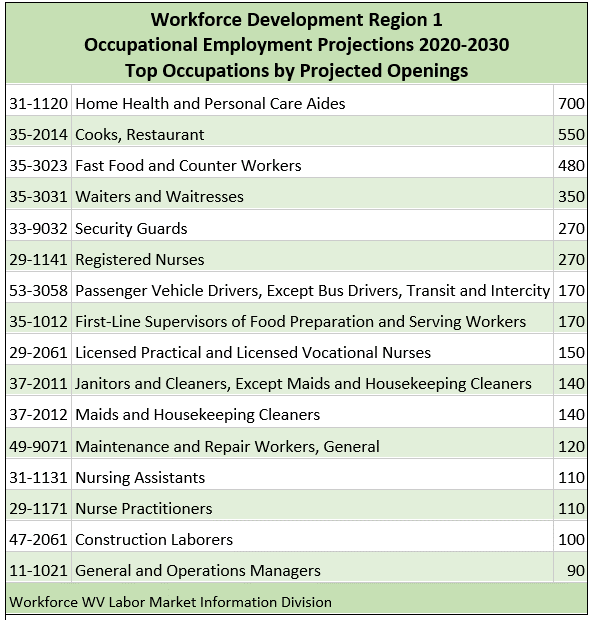
In Workforce Development Region 1 of West Virginia, the occupational employment projections for the period 2020-2030 spotlight key occupations with the highest anticipated job openings. Leading the projections is the demand for Home Health and Personal Care Aides, with an estimated 700 openings, reflecting the region's emphasis on healthcare and social services. In the culinary sector, Cooks in restaurants and Fast Food and Counter Workers are projected to see 550 and 480 openings, respectively. The list continues through other sectors, including positions such as Registered Nurses, Security Guards, and Construction Laborers. These projections provide valuable insights into the evolving workforce landscape and should guide strategic decisions for regional development and employment planning.
Figure 41: WDR 1 Top 15 Occupations by Projected Job Openings
Source: WV Labor Market Information Division
Workforce Development Region 2 Occupational Employment Projections 2020-2030
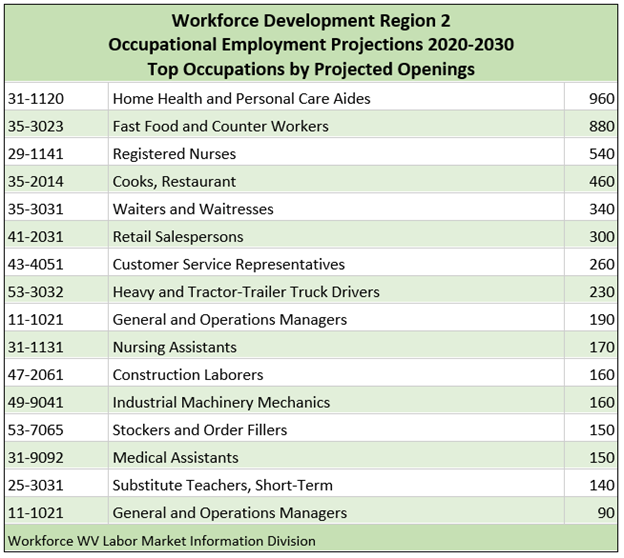
In Workforce Development Region 2 of West Virginia, the highest demand is in healthcare services, with high numbers for Home Health and Personal Care Aides (960 openings) as well as Registered Nurses (540 openings). In the culinary sector, Fast Food and Counter Workers and Restaurant Cooks are projected to see substantial openings of 880 and 460, respectively. The list also includes positions in retail, customer service, and logistics, with heavy emphasis on Heavy and Tractor-Trailer Truck Drivers, Construction Laborers, and Industrial Machinery Mechanics.
Figure 42: WDR 2 Top 15 Occupations by Projected Job Openings
Source: WV Labor Market Information Division
Workforce Development Region 3 Occupational Employment Projections 2020-2030
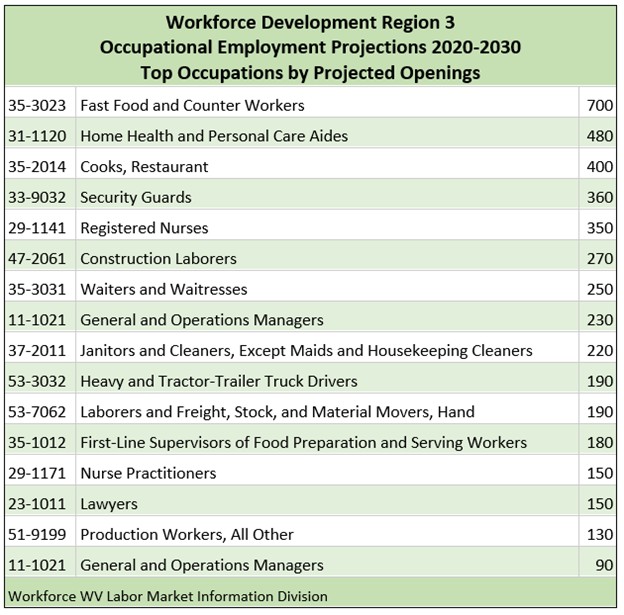
In Workforce Development Region 3 of West Virginia, Fast Food and Counter Workers lead with a substantial projection of 700 openings, underscoring the importance of the hospitality industry, especially considered next to the number of openings for Restaurant Cooks (400) and Waiters and Waitresses (250). Home Health and Personal Care Aides follow with 480 projected openings, which, alongside openings for Registered Nurses (350), reflects growing demand for healthcare services. Construction Laborers (270) and Heavy and Tractor-Trailer Truck Drivers (190) indicate a demand for skilled workers in essential sectors, aligning with the region's economic needs.
Figure 43: WDR 3 Top 15 Occupations by Projected Job Openings
Source: WV Labor Market Information Division
Workforce Development Region 4 Occupational Employment Projections 2020-2030
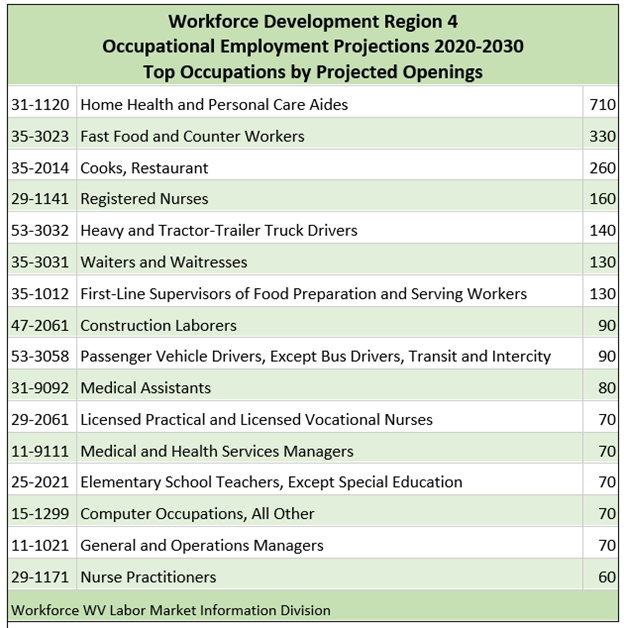
In Workforce Development Region 4 of West Virginia, the occupational employment projections for 2020-2030 reveal key occupations with projected openings. Home Health and Personal Care Aides lead with 710 anticipated openings, emphasizing the region's focus on healthcare and support services. Fast Food and Counter Workers and Restaurant Cooks reflect the continued demand in the hospitality industry, with 330 and 260 projected openings, respectively. Registered Nurses and Heavy and Tractor-Trailer Truck Drivers follow suit, showcasing the importance of healthcare and transportation sectors. Construction Laborers and First-Line Supervisors of Food Preparation and Serving Workers also feature in the projections, indicating a diverse range of occupational needs. These insights provide a foundation for regional workforce planning and strategic economic development initiatives.
Figure 44: WDR 4 Top 15 Occupations by Projected Job Openings
Source: WV Labor Market Information Division
Workforce Development Region 5 Occupational Employment Projections 2020-2030
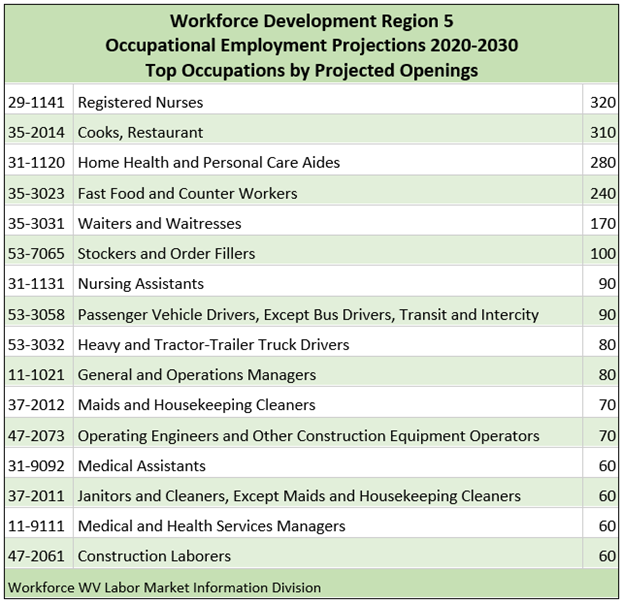
Within Workforce Development Region 5, Registered Nurses take a prominent position with 320 projected openings, and Home Health and Personal Care Aides anticipate 280 openings, reflecting the continued demand for skilled healthcare professionals. The hospitality industry, exemplified by Restaurant Cooks and Fast Food and Counter Workers, anticipates 310 and 240 openings, respectively. This region also showcases openings in transportation, with projections for Passenger Vehicle Drivers (90) and Heavy and Tractor-Trailer Truck Drivers (80).
Figure 45: WDR 5 Top 15 Occupations by Projected Job Openings
Source: WV Labor Market Information Division
Workforce Development Region 6 Occupational Employment Projections 2020-2030
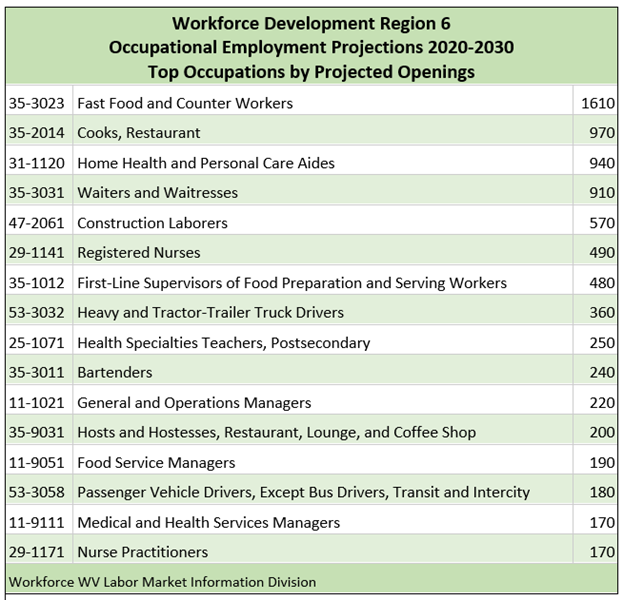
Workforce Development Region 6 demonstrates a robust demand for positions in the hospitality sector, as evidenced by Fast Food and Counter Workers, Restaurant Cooks, and Waiters and Waitresses, projecting 1610, 970, and 910 openings, respectively. Home Health and Personal Care Aides follow closely at 940, which, along with Registered Nurses at 490, reflect the region's emphasis on healthcare support services. Construction Laborers and Registered Nurses also feature prominently, showcasing the region's commitment to infrastructure development. The demand for skilled workers extends to management roles, such as General and Operations Managers and Food Service Managers, indicating a need for leadership across industries.
Figure 46: WDR 6 Top 15 Occupations by Projected Job Openings
Source: WV Labor Market Information Division
Workforce Development Region 7 Occupational Employment Projections 2020-2030
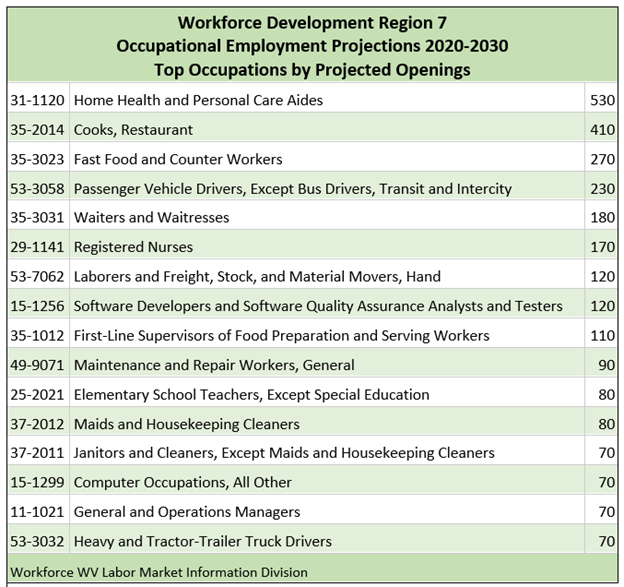
In Workforce Development Region 7, Home Health and Personal Care Aides project the highest number of openings at 530 and reflect the region's emphasis on healthcare and support services, seen also in 180 openings for Registered Nurses. The culinary industry also features prominently, with significant openings for Restaurant Cooks (410), Fast Food and Counter Workers (270), and First-Line Supervisors of Food Preparation and Service Workers (110), illustrating the region's vibrant food sector. A notable aspect is the demand for transportation roles, including Passenger Vehicle Drivers (230) and Heavy and Tractor-Trailer Truck Drivers (70), indicating the region's reliance on efficient logistics. The projections also highlight the need for skilled professionals across sectors, including education (Elementary School Teachers – 80) and technology (Software Developers – 120).
Figure 47: WDR 7 Top 15 Occupations by Projected Job Openings
Source: WV Labor Market Information Division
West Virginia's regional data indicates that healthcare and tourism are two of the state's most significant industries, presenting a clear need for workforce development initiatives that prepare individuals for careers in these sectors. As the state's economy evolves, these industries are poised for growth, driving the need for a skilled and adaptable workforce.
West Virginia has a growing demand for healthcare professionals due to its aging population and an increased focus on public health. This demand encompasses a wide range of roles, from physicians and nurses to medical technicians and healthcare support staff.
Given West Virginia's rural landscape, there's a particular need for healthcare workers who can serve remote and underserved areas. Workforce development initiatives that target rural healthcare training help to ensure that all regions of the state have access to quality medical services. To sustain the healthcare workforce, programs that offer career advancement and retention support are vital. This includes continuing education, mentorship, and pathways for career progression within the healthcare industry.
West Virginia's tourism industry is a significant contributor to the state's economy, with its natural beauty, outdoor activities, and historic sites attracting visitors. The industry creates job opportunities in hospitality, outdoor recreation, travel services, and more. Workforce development programs tailored to the tourism industry help prepare individuals for roles in hospitality management, customer service, and recreation. These programs often involve partnerships with tourism boards, local businesses, and educational institutions to offer specialized training and certification.
The tourism industry relies heavily on soft skills such as communication, customer service, and teamwork. Programs that focus on developing these skills are crucial for preparing individuals for successful careers in tourism and enhancing the overall visitor experience. West Virginia's unique culture and heritage are central to its tourism appeal. Workforce development initiatives that promote local history, crafts, and traditions contribute to the industry's vibrancy and sustainability.
Many programs included in the state's workforce development plans aim to fill the greatest industry needs, focusing on healthcare and tourism. This alignment ensures that resources are directed toward areas with the most significant potential for job creation and economic growth.
Education
The presented data illustrates the percentage of the population aged 25 years or older holding a bachelor's degree or higher across the nation, providing valuable insights into the educational attainment of different regions. West Virginia stands out with a comparatively lower percentage at 24.8%, emphasizing the need for initiatives that promote higher education in the state. Contiguous states such as Maryland, Virginia, and Pennsylvania boast higher percentages, indicating a more significant proportion of individuals with advanced educational qualifications. Educational attainment plays a crucial role in shaping workforce capabilities and economic development, making it imperative for policymakers and educators to focus on strategies that enhance educational opportunities and attainment levels, particularly in regions with lower percentages. The national average of 34.5% underscores the ongoing national effort to foster a highly educated population.
Figure 48: Population 25 Plus with Bachelor’s Degree or Higher

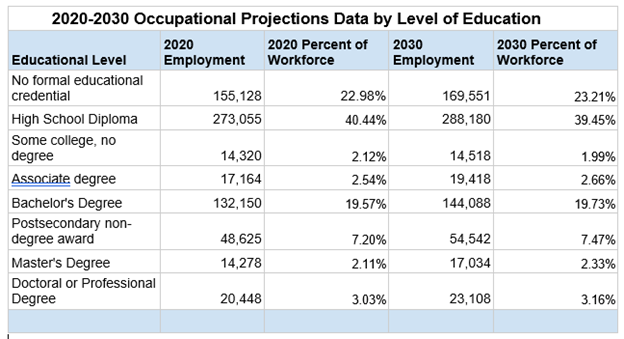
The 2020-2030 Occupational Projections Data by Level of Education for West Virginia provides a comprehensive snapshot of the state's evolving workforce landscape. The data reveals significant shifts in employment distribution across various educational levels, underscoring the dynamic nature of the state's economy. Notably, the projections indicate a modest increase in total employment, with a nuanced focus on educational attainment. High school diploma holders continue to form a substantial part of the workforce, although their percentage of the workforce is anticipated to decrease slightly by 2030. Conversely, the demand for individuals with associate degrees and postsecondary non-degree awards is expected to rise, reflecting a growing need for specialized skills and technical expertise. The projections also highlight the importance of higher education, as employment figures for bachelor's, master's, and doctoral or professional degree holders are set to increase. This data reinforces the significance of educational initiatives and workforce development programs to align with the evolving demands of West Virginia's job market and foster a resilient and well-educated workforce.
Figure 49: WV Occupational Projections by Education
Source: Workforce West Virginia Labor Market Information - Occupational Projections Data
The latest economic data on median earnings by education level in West Virginia reveals important insights into the correlation between educational attainment and financial prosperity. The figures underscore the significance of education in shaping income dynamics across the state.
Overview of Median Earnings:
- For the population aged 25 years and over with earnings, the overall median income stands at $42,738. This figure reflects the combined earnings of both male and female individuals in this age group.
Educational Attainment and Earnings:
- Less than High School Graduate:
- Individuals with less than a high school diploma have a median income of $26,692. This group demonstrates a substantial income disparity, with males earning $31,728 compared to females earning $22,346.
- High School Graduate (includes equivalency):
- Those with a high school diploma or equivalency exhibit a higher median income at $35,052. Males in this category have a median income of $42,328, while females earn $26,556.
- Some College or Associate Degree:
- Individuals with some college education or an associate degree show a further increase in median income, reaching $40,791. The gender disparity continues to be notable, with males earning $51,797 and females earning $33,565.
- Bachelor's Degree:
- The median income for individuals with a bachelor's degree rises significantly to $52,887. Males with a bachelor's degree earn $61,978, while females earn $46,408.
- Graduate or Professional Degree:
- Those with a graduate or professional degree demonstrate the highest median income at $63,974. This group showcases a substantial gender income gap, with males earning $81,142 compared to females earning $56,531.
Education plays a pivotal role in determining median earnings in West Virginia. As educational attainment increases, so too does the median income, underlining the importance of fostering educational opportunities and access to higher education. Policymakers and educators can draw from these insights to tailor initiatives that promote educational advancement, address gender income disparities, and contribute to the overall economic well-being of West Virginia's residents.
Figure 50: Median Annual Earnings by Education Level

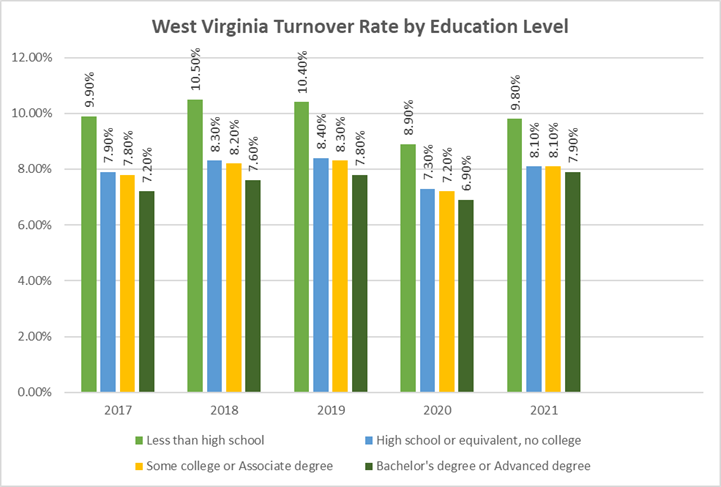
Education levels may also impact turnover rate with data showing a potential correlation between education level and employment stability, with higher educational attainment associated with lower turnover. Individuals with less than a high school education consistently exhibited higher turnover rates, starting at 9.90% in 2017 and slightly decreasing to 9.80% in 2021. Meanwhile, those with a bachelor's degree or advanced degree consistently had lower turnover rates, starting at 7.20% in 2017 and experiencing a modest increase to 7.90% in 2021. Understanding these trends is crucial for policymakers and businesses to tailor strategies that promote workforce stability and leverage the skills of a more educated labor force for sustained economic growth.
Figure 51: Turnover Rate by Education Level
Skill Gaps
The term Skills Gap, defined as “a significant mismatch between the needs of employers for skills and the current capabilities of available workforce,” is of particular concern in West Virginia as it has the lowest labor force participation rate (LFPR) in the nation, and businesses attempting to fill positions vacated during the pandemic have expressed concerns about finding skilled workers to fill these vacancies. This is being addressed in West Virginia through various initiatives, including a blue ribbon task force meant to identify and align employer needs with workforce abilities concluded last year and the “No Wrong Door” program described elsewhere in this plan, which effectively coordinates work between state and local workforce partners, employers, post-secondary education institutions, and community-based service providers.
The West Virginia Skills Assessment for the period 2020-2030 highlights crucial skills that play a pivotal role in employment dynamics. Data from this assessment shows the current employment levels and projected growth for skills that are key for success across industries. Critical Thinking, Active Listening, and Speaking emerge are the three skills with the highest projected employment growth, underlining their significance in the evolving job market. However, challenges are evident, as skills like Mathematics show a negative growth trend, indicating a potential gap that requires attention.
Additionally, the data underscores the importance of interpersonal skills such as Social Perceptiveness, Service Orientation, and Persuasion, which are integral for effective communication and collaboration in diverse work environments. Projected numbers of exits and transfers alongside that project growth signify the need for strategic initiatives to address potential skills gaps and ensure a skilled, adaptable workforce in West Virginia. Labor force exits are the projected number of workers leaving an occupation and exiting the labor force entirely. Labor force exits are more common at older ages as workers retire but can occur at any age. Labor force exits are not necessarily permanent exits from the labor force; for example, some workers exit the labor force to pursue additional education with the intention of returning to the labor force. They do represent permanent separations from an occupation. Occupational transfers are the projected number of workers leaving an occupation and transferring to a different occupation. Transfers represent permanent separations from an occupation, not temporary movements where the worker is expected to return to the same occupation in the future. Policy makers and educators can utilize this data to align training and education programs with the evolving demands of the job market, fostering a resilient and competitive workforce for the state's economic future.
Figure 52: West Virginia Skills Assessment 2020-2030

Source: WV Labor Market Information Division
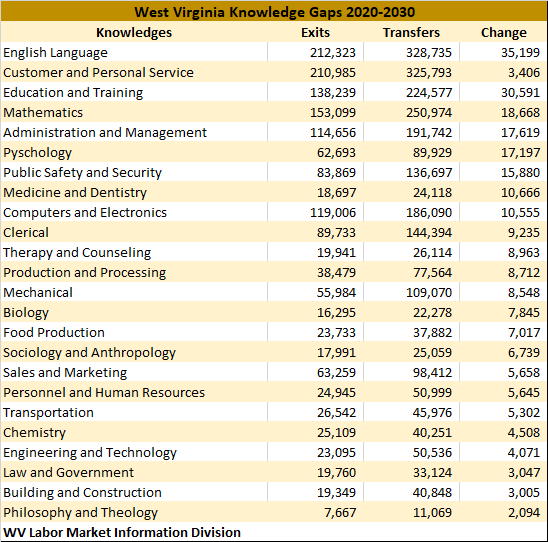
In the evolving landscape of West Virginia's workforce, critical concerns emerge as we examine knowledge gaps projected from 2020 to 2030. The data delineates the anticipated exits, transfers, and changes within various knowledge domains, shedding light on areas where the state may face challenges. English Language and Customer and Personal Service lead the charts, with substantial numbers of individuals exiting or transferring within these knowledge realms. Education and Training, Mathematics, and Administration and Management closely follow, underscoring the importance of addressing gaps in these areas. As we navigate this intricate tapestry of knowledge dynamics, strategic measures are imperative to bridge these gaps and cultivate a resilient and well-rounded workforce for West Virginia. The projections emphasize the need for targeted educational and professional development initiatives to ensure a seamless transition and sustainable growth across diverse sectors within the state.
Figure 53: West Virginia Knowledge Gaps, 2020-2030
Source: WV Labor Market Information Division
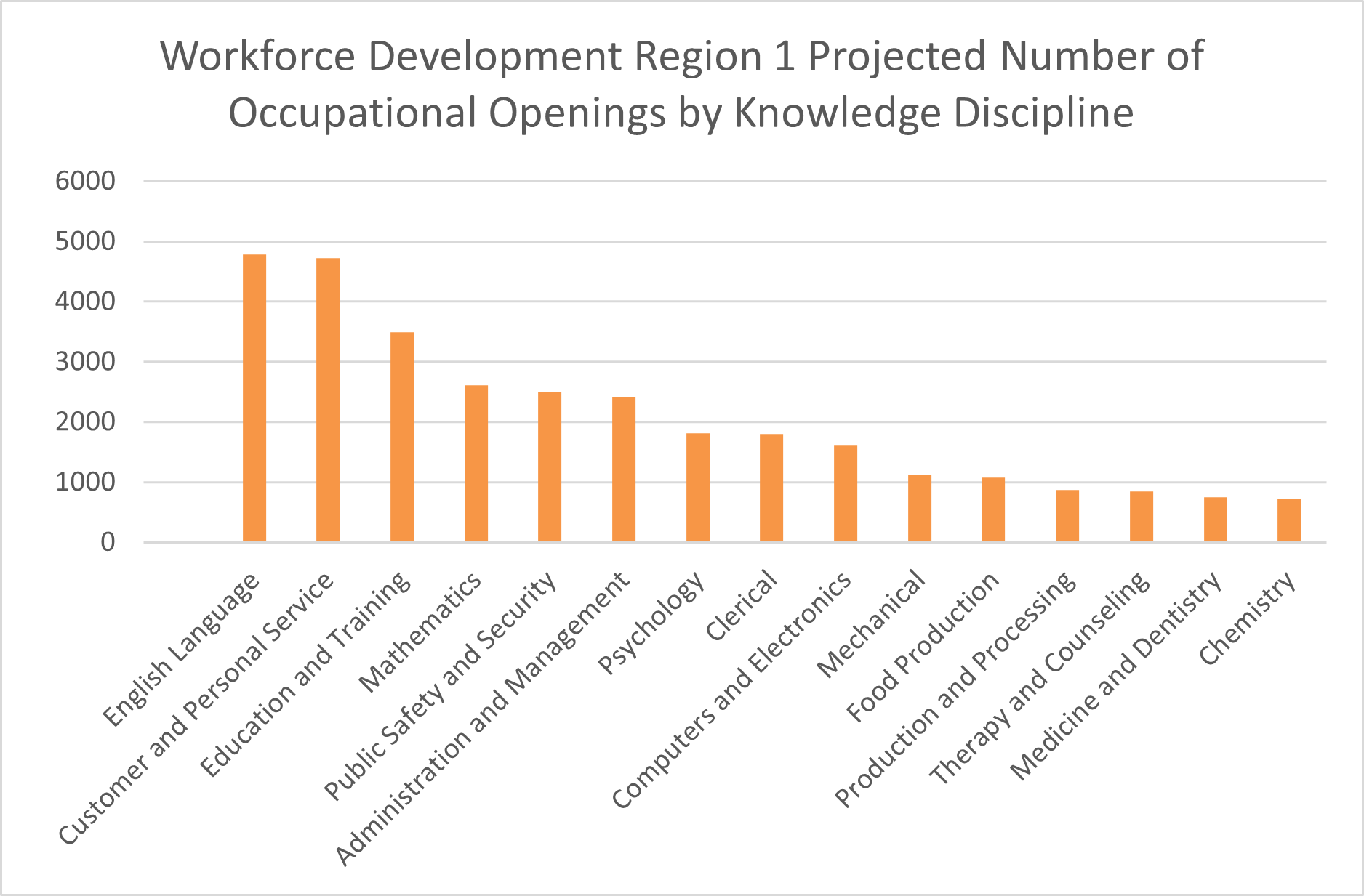
In Workforce Development Region 1, the projected number of occupational openings shows needs across a wide range of disciplines. The demand is notably high in English Language, with 4,789 openings, emphasizing the importance of effective communication skills. Customer and Personal Service, with 4,720 projected openings, underscores the significance of interpersonal skills in meeting the needs of clients and customers. As the region anticipates growth, Mathematics (2,613 openings) and Computers and Electronics (1,604 openings) emerge as critical areas with considerable opportunities, suggesting a need for individuals with proficiency in STEM fields. As the region navigates the evolving workforce landscape, addressing skill gaps in these areas becomes imperative for fostering a robust and adaptable workforce.
Figure 54: Workforce Development Region 1 Knowledge Competency Requirements
Source: Workforce WV Labor Market Information Projections
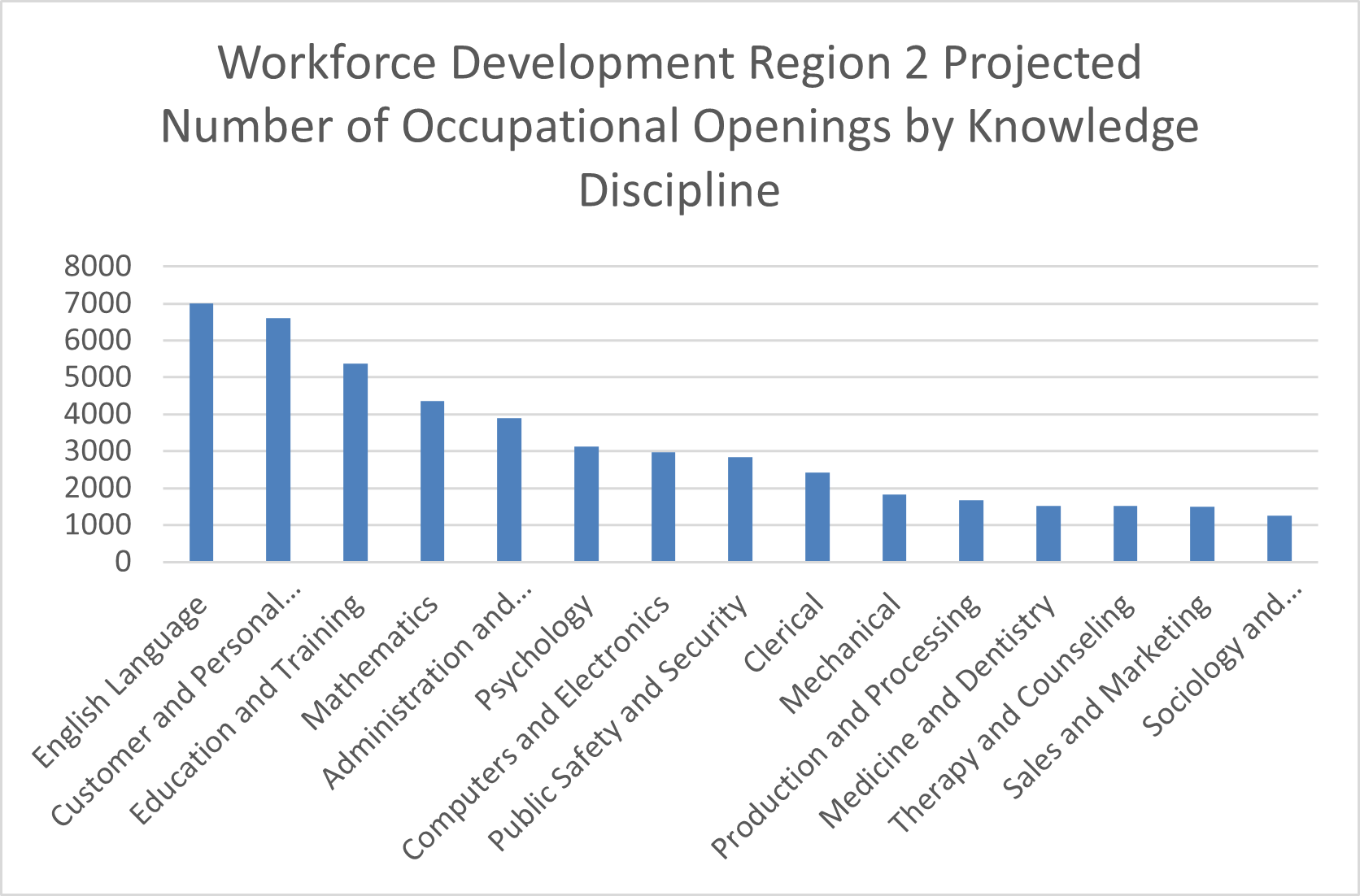
In Workforce Development Region 2, occupational openings in English Language (6,991) highlights the significance of strong communication skills in various professional contexts. The Customer and Personal Service sector, with 6,614 openings, emphasizes the continued importance of personalized interactions in service-oriented industries. As the region anticipates growth, Mathematics (4,363 openings) and Computers and Electronics (2,965 openings) emerge as critical areas with considerable opportunities, suggesting a need for individuals with proficiency in STEM fields. Bridging skill gaps to fill these positions will be essential West Virginia’s dynamic workforce landscape to thrive.
Figure 55: Workforce Development Region 2 Knowledge Competency Requirements
Source: Workforce WV Labor Market Information Projections
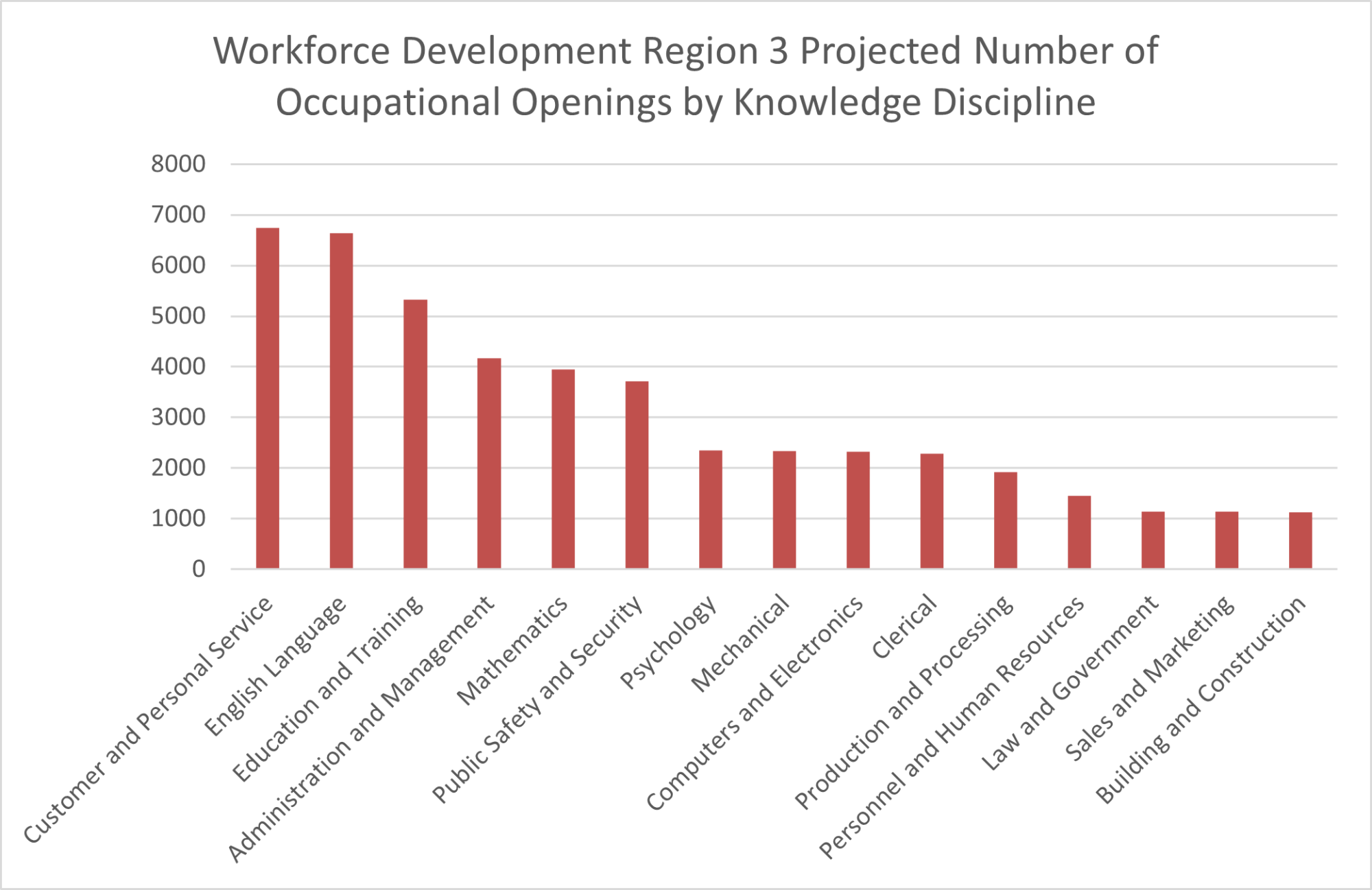
Within Workforce Development Region 3, openings in Customer and Personal Service (6,739) emphasizes the region's emphasis on service-oriented professions. English Language (6,644 openings) and Education and Training (5,331 openings) highlight the importance of effective communication and educational expertise in the evolving job market. The prominence of Administration and Management (4,162 openings) and Mathematics (3,948 openings) suggests a demand for individuals with strong leadership and analytical skills. Notably, the presence of Computers and Electronics (2,318 openings) and Mechanical (2,334 openings) positions points to the ongoing significance of STEM-related competencies.
Figure 56: Workforce Development Region 3 Knowledge Competency Requirements
Source: Workforce WV Labor Market Information Projections
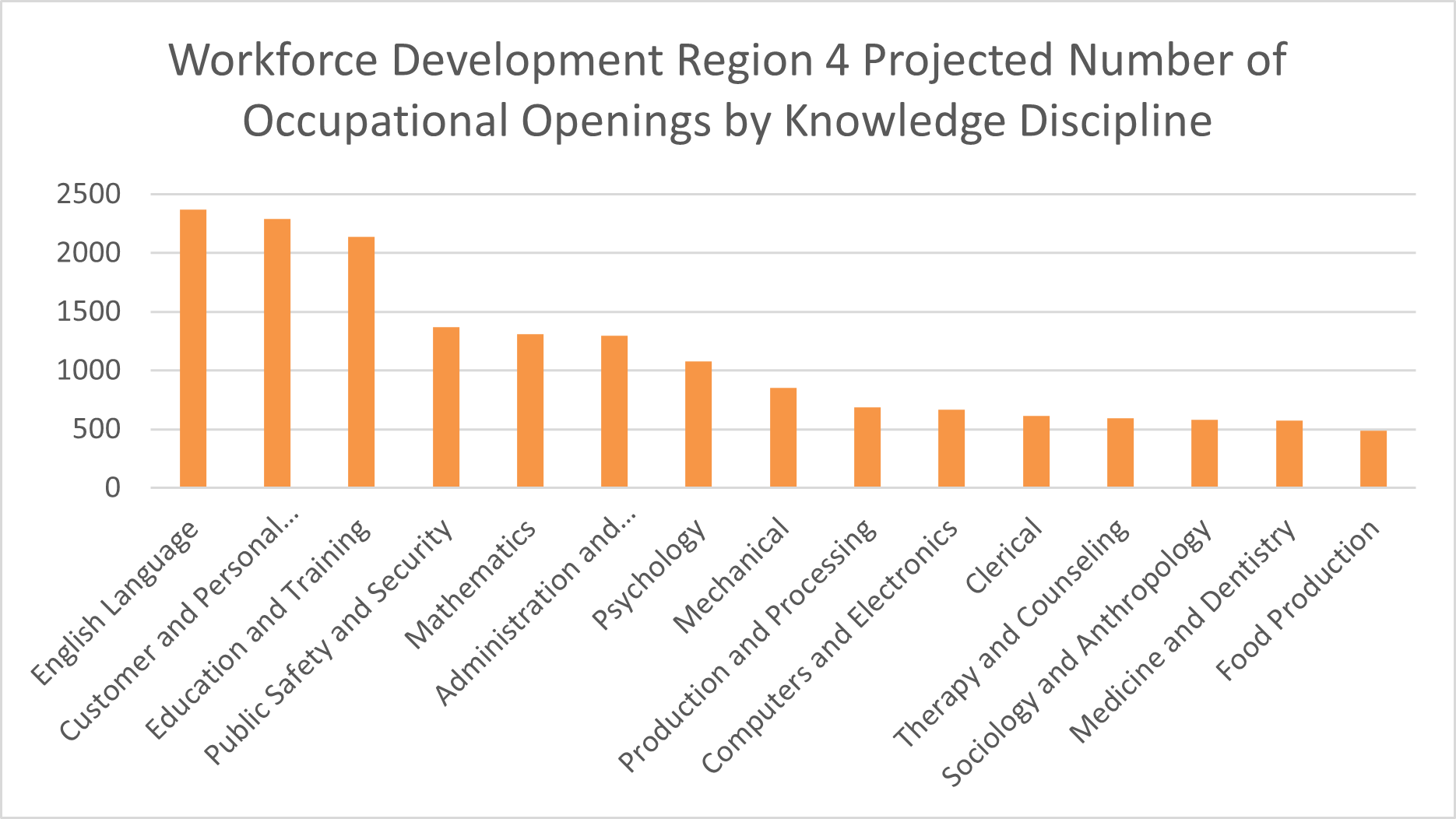
Within Workforce Development Region 4, openings in English Language (2,369) emphasize the continued demand for effective communicators. Customer and Personal Service (2,290 openings) and Education and Training (2,139 openings) signify the importance of service-oriented roles and educational expertise. Public Safety and Security (1,369 openings) highlights the region's commitment to ensuring community safety. The presence of Mathematics (1,308 openings) and Administration and Management (1,298 openings) underlines the significance of analytical and leadership skills. Furthermore, the inclusion of Mechanical (852 openings) and Computers and Electronics (665 openings) suggests a growing need for individuals with STEM-related competencies.
Figure 57: Workforce Development Region 4 Knowledge Competency Requirements
Source: Workforce WV Labor Market Information Projections
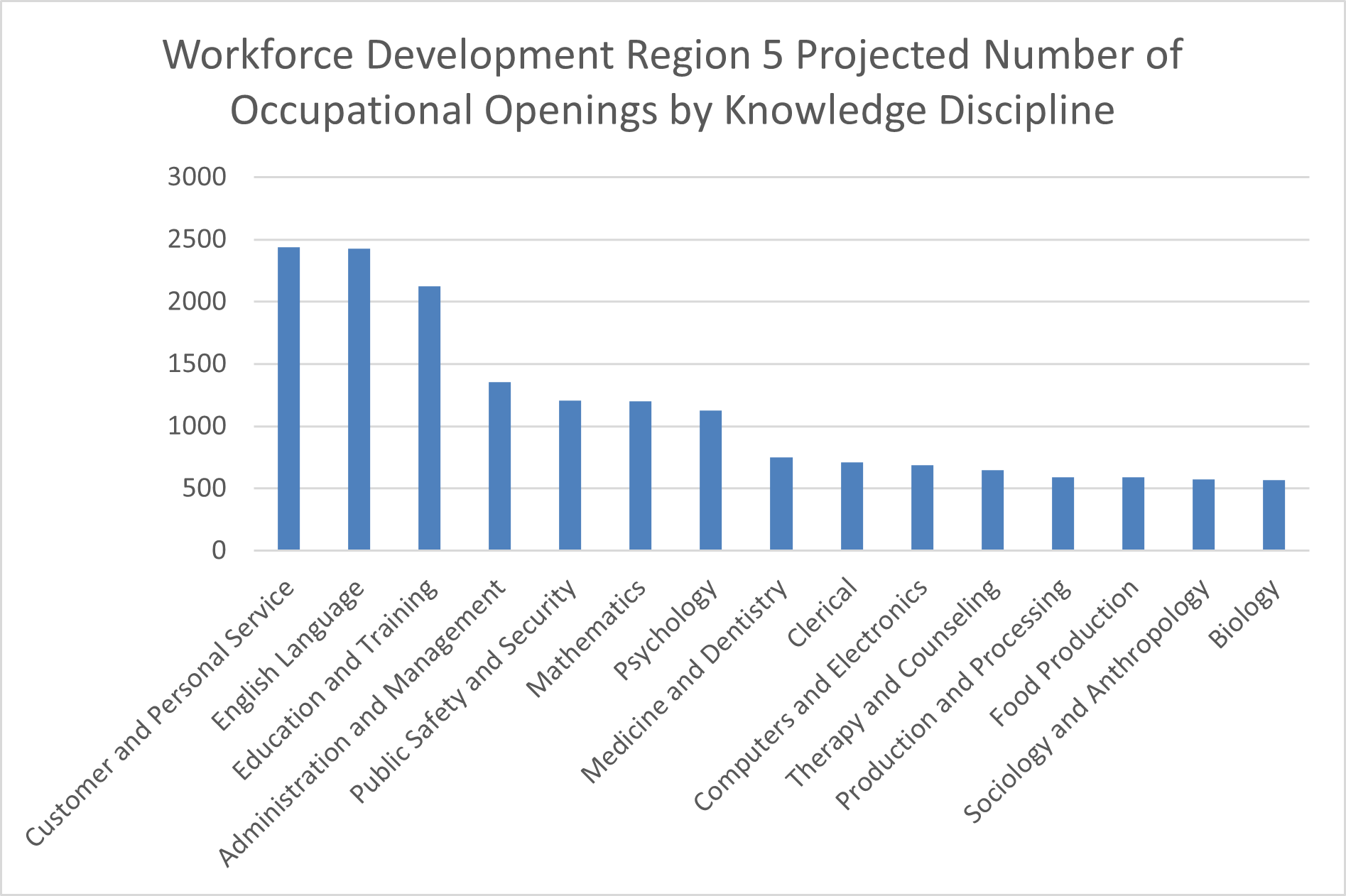
Within Workforce Development Region 5, the projected number of occupational openings in Customer and Personal Service (2,438) and English Language (2,424) highlight the continued demand for roles centered around effective communication and service provision. Education and Training (2,123 openings) signifies the region's commitment to fostering a knowledgeable workforce. Administration and Management (1,352 openings) and Public Safety and Security (1,205 openings) underscore the need for strong leadership and safety-oriented skills. Mathematics (1,200 openings) and Computers and Electronics (685 openings) indicate the growing importance of STEM-related competencies. The inclusion of Medicine and Dentistry (751 openings) reflects the region's emphasis on healthcare, while Clerical (712 openings) emphasizes administrative support roles.
Figure 58: Workforce Development Region 5 Knowledge Competency Requirements
Source: Workforce WV Labor Market Information Projections
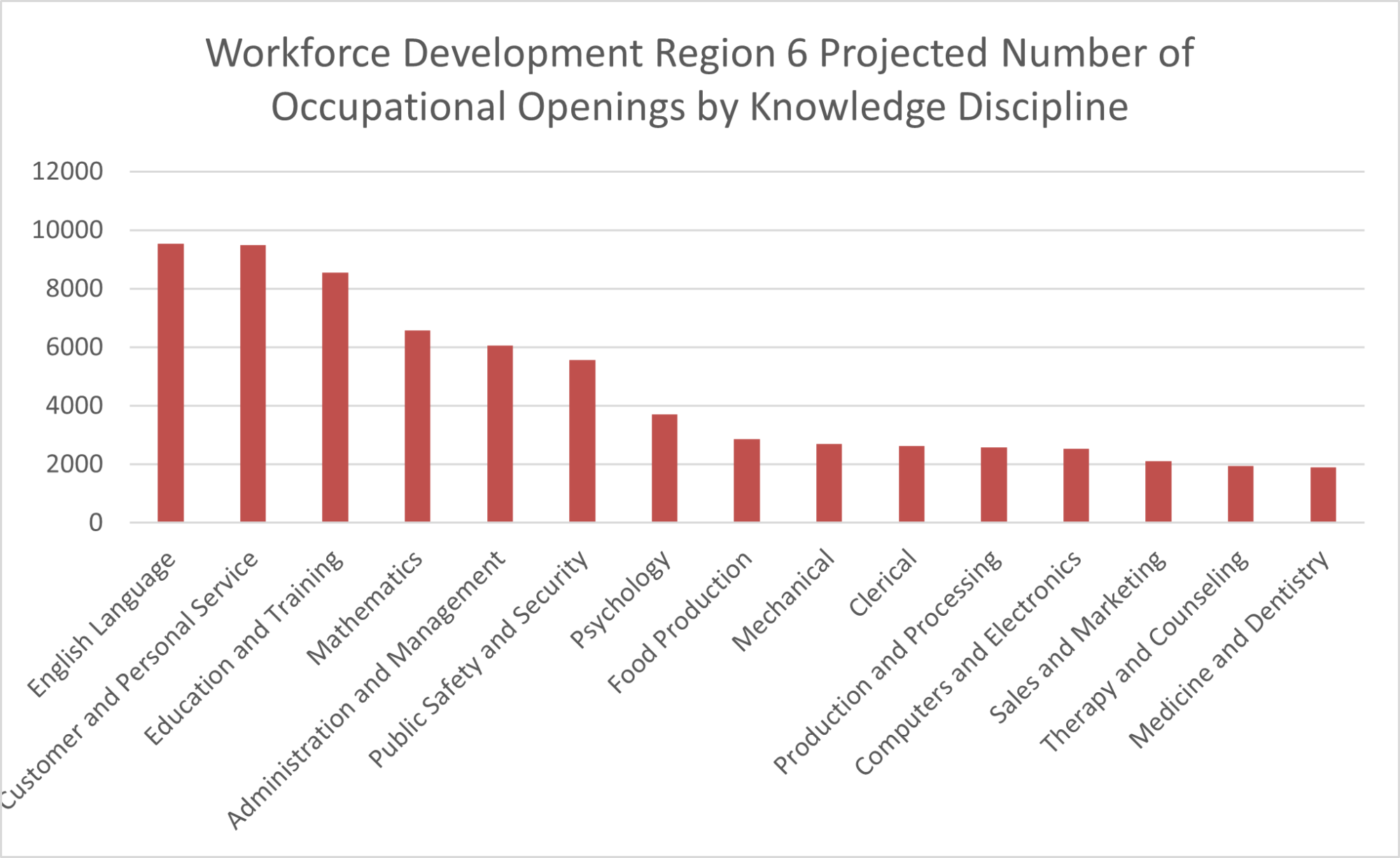
Within Workforce Development Region 6, the projected number of occupational openings in English Language (9,549) and Customer and Personal Service (9,503) showcase the region's ongoing reliance on effective communication and service-oriented roles. Education and Training (8,558 openings) underscores the commitment to nurturing knowledge, aligning with the region's dedication to educational excellence. Mathematics (6,572 openings) and Administration and Management (6,058 openings) highlight the increasing importance of STEM-related competencies and leadership skills. Public Safety and Security (5,577 openings) emphasizes the demand for professionals ensuring community well-being. Psychology (3,700 openings) adds a dimension of human understanding to the workforce, while Medicine and Dentistry (1,908 openings) underscores the significance of healthcare.
Figure 59: Workforce Development Region 6 Knowledge Competency Requirements
Source: Workforce WV Labor Market Information Projections
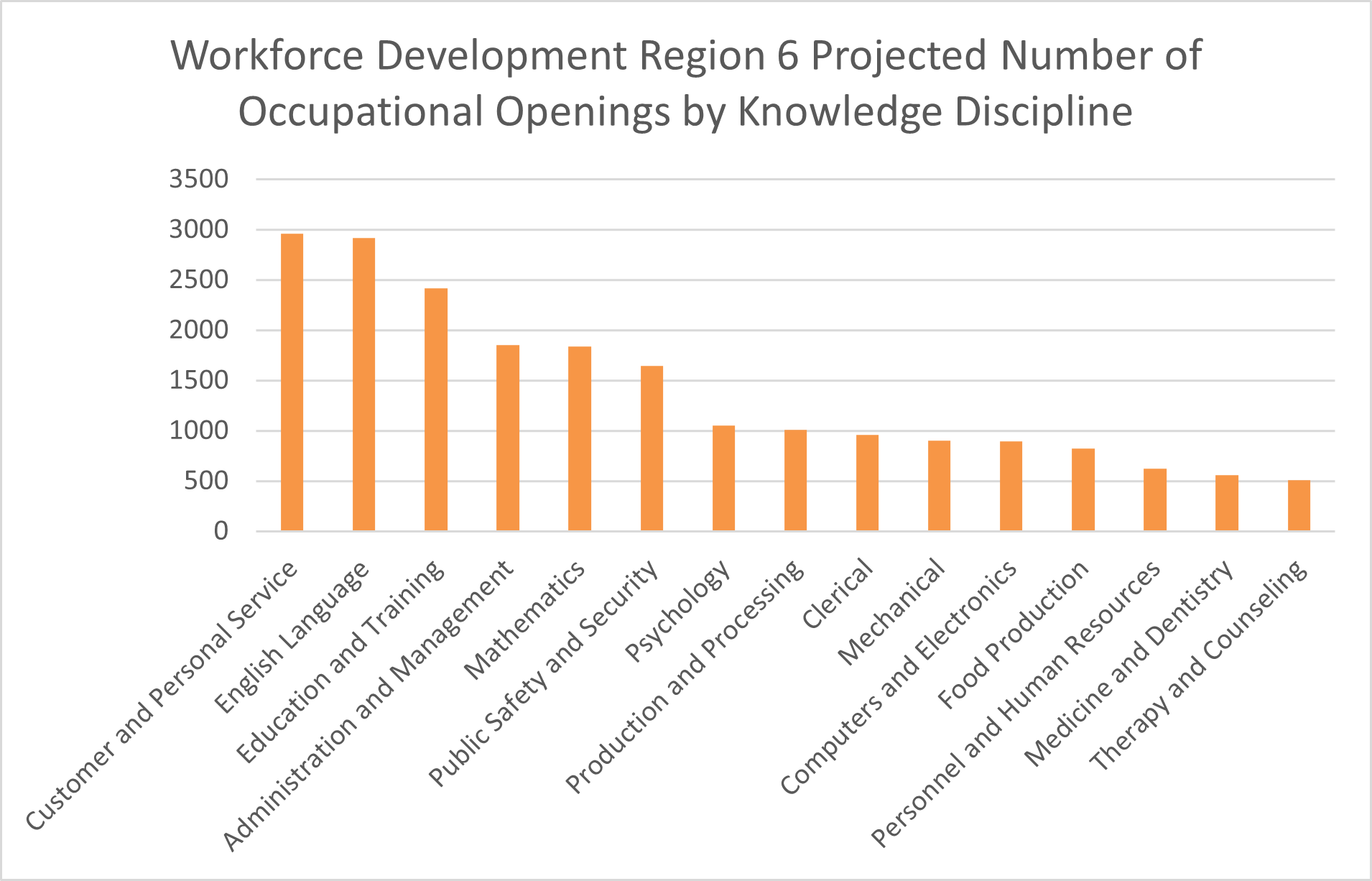
Within Workforce Development Region 7, the projected number of occupational openings in Customer and Personal Service (2,956) and English Language (2,918) reflect the region's emphasis on interpersonal skills and effective communication. Education and Training (2,417 openings) speaks to the commitment to fostering learning environments, aligning with the region's dedication to educational excellence. Administration and Management (1,854 openings) and Mathematics (1,840 openings) underscore the growing importance of leadership and STEM-related skills. Public Safety and Security (1,647 openings) emphasizes the need for professionals ensuring community safety. Psychology (1,048 openings) contributes to a nuanced understanding of human behavior, while Medicine and Dentistry (558 openings) signifies the ongoing demand for healthcare expertise.
Figure 60: Workforce Development Region 7 Knowledge Competency Requirements
Source: Workforce WV Labor Market Information Projections
Each year, the WV Division of Rehabilitation Services (WVDRS) assists thousands of individuals with disabilities to meet the needs of West Virginia’s employers. DRS’ counselors work one-on-one with each consumer to review pertinent labor market information to identify in-demand jobs and provide ongoing support to ensure they meet, or obtain, the skills required for in-demand occupations. This includes assistance in obtaining their high school diploma and/or additional postsecondary training including four-year and graduate degrees.
WVDRS believes that coordination with employers is integral to improving the workforce development system. Gathering/collecting information about employer needs, which will also be shared with other Workforce Innovation and Opportunity Act (WIOA) partners, allows WVDRS to provide training and other services to vocational rehabilitation (VR) consumers to meet business needs and expectations of current and future workers. To optimize its coordination with employers to identify competitive integrated employment and career exploration opportunities for consumers with disabilities, WVDRS takes a multifaceted approach. WVDRS utilizes its own personnel in addition to partnering with WorkForce WV to coordinate with employers across the state. Additionally, WVDRS has specific programs/strategies to identify employment and career exploration opportunities for students with disabilities, including the provision of pre-employment transition services (Pre-ETS). The strategies that WVDRS uses are described below.
WVDRS has an in-house Employer Services Section that specializes in providing employers with disability-related information, services, and pre-screened job seekers. The WVDRS Employer Services Section has 10 employment specialists that cover all 55 counties in West Virginia. WVDRS’ team of employment specialists provide business owners and employers with critical business options and assistance in staffing, employee retention strategies, education on disability-related issues, job accommodations, and information about financial incentives for employers who hire individuals with disabilities. In fiscal year 2023, employment specialists provided 647 services to 402 employers; coordinated with WorkForce WV; attended statewide and local Business Services Team meetings; participated in rapid response events; attended local workforce development board (WDB) meetings; provided Job Clubs for students with disabilities; and participated in opportunities for collaboration with community colleges, community rehabilitation programs, and other organizations responsive to the workforce needs of businesses.
Sample of services provided to employers:
- Pre-screened qualified applicants to reduce employers’ cost of recruitment and hiring.
- Consultation, recommendation, and training for retention of employees who acquire a disability.
- Technical assistance on the Americans with Disability Act (ADA).
- Accessibility options and solutions.
- Employer and employee onsite disability awareness training.
- Information on tax credits available to employers for hiring individuals with disabilities.
Direct contact with employers is a key strategy to identify competitive integrated employment and career exploration opportunities for VR consumers, including students with disabilities.
Employment specialists contact employers to identify current and future job openings. To complement this, WVDRS utilizes labor market information provided by WorkForce WV to identify the top employers in each county; contact is always made with the top ten employers in each county. When meeting with employers, employment specialists provide valuable information, including the WVDRS Employer Resource Guide. The resource guide provides the following information:
- Staffing services;
- Training programs and incentives for hiring people with disabilities;
- Financial incentives;
- Accessibility assessments;
- Accommodating employees with disabilities;
- Basic disability etiquette;
- Attitudinal barriers;
- Americans with Disabilities Act;
- Locating a WVDRS office; and
- Where to find additional resources.
The Employer Services Section inputs information into the WorkForce WV database for each WVDRS-employer interaction with employment specialists. The information collected includes the business name, contact person, and current job openings by occupation. If needed, a referral to the WVDRS Rehabilitation Technology Unit is made to address workplace accommodations. This list is distributed to WVDRS field staff to potentially match a job-ready VR consumer with a current job opening. Through positive working relationships with employers, including some of the largest in the state, some now send job postings directly to WVDRS’ Employer Services Section.
WVDRS also coordinates with employers through participation and membership in various community and regional organizations. These activities range from employer-specific organizations to public-private partnerships and allow WVDRS to better understand the needs of employers while jointly developing employment-related activities. Some of these partnerships include:
- Regional Workforce Development Boards;
- Tri-State Society for Human Resource Management;
- Chamber of Commerce of Beckley/Raleigh County;
- Chamber of Commerce of Fayette County;
- Chamber of Commerce of Jefferson County;
- Cabell County Family Resource Network;
- Greater Wheeling Reentry Policy Council;
- Chamber of Commerce of the Mid-Ohio Valley;
- Workforce Business Services Units – Fayette, Greenbrier, Mercer, Monroe, Nicholas, Pocahontas, Raleigh, Summers, and Webster counties; and
- Employment Specialists attend Community Relations Board meetings at the Federal Prisons in Alderson and Beckley.
Another key strategy to coordinate with employers is through collaboration with WorkForce WV, a WIOA core partner. WorkForce WV is the state agency that oversees numerous U.S. Department of Labor programs. This partnership takes place at all levels, including local offices, regional workforce development boards, and state level Interagency Collaboration Team meetings. These partnerships have been of great benefit for West Virginians with disabilities seeking training and employment.
Because of the services it provides, WorkForce WV has the largest database of both job seekers and job openings in the state. WVDRS is able to tap into these resources to identify current employment opportunities for VR consumers, identify needs of employers across the state, and utilize detailed labor market information to assist individuals (including students) with disabilities in identifying future career opportunities. This allows VR consumers to identify potential employment opportunities and any training or other VR services that are required for the job. Additionally, job-ready VR consumers can create an account with WorkForce WV to find employers seeking workers with specific skills they already possess.
In addition to the previously described activities, the Employer Services Section also works with employers to better serve transitioning youth with disabilities, including providing career exploration opportunities for students with disabilities.
Employment specialist services, including Pre-ETS, provided to students with disabilities:
- POWER job shadowing program,
- Transition fairs,
- Job readiness workshops,
- Job clubs,
- Interviewing,
- Resume preparation,
- Application assistance,
- Dressing for an interview/employment,
- Job retention and good work habits,
- Job search and employer contacts,
- Assist students in locating employment opportunities and help with applying to job openings, and
- Advocating on the student’s behalf to employers when requested by the student.